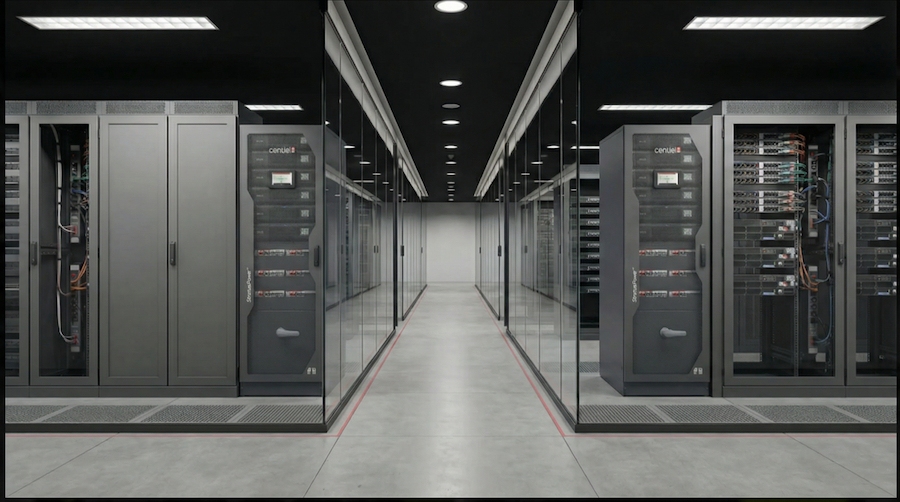
Optimizing UPS Systems for AI Data Center Workloads
AI data center workloads introduce synchronized load swings and partial loading that reveal inefficiencies in many legacy UPS designs. Colocation operators must reassess UPS selection, sizing, and architecture for this new operating reality, moving beyond traditional enterprise IT patterns.
What This Article Covers
- 30–80kW rack density
- Rapid load swings
- Partial load inefficiency in traditional UPS
- Cooling interplay
- DARA distributed behavior
How Do AI Workloads Change Rack Power Density and Load Behavior Compared with Legacy IT?
AI workloads, especially those with GPU clusters, drive sustained high utilization with synchronized power draw, resulting in higher and more dynamic rack power densities than typical legacy IT deployments[1]. This shift requires rethinking power and cooling strategies at the rack and row level, as AI racks commonly exceed 30 kW, with many designs planning for 30–60 kW per rack and some going higher[2]. These densities demand robust UPS systems capable of managing rapid, large step load changes without instability or excessive voltage deviation.
Failure Modes
Traditional UPS systems may experience voltage excursions and nuisance alarms with the steep load steps typical of AI clusters. This can lead to unwanted transfers to bypass, impacting resilience and service levels[3].
Maintenance Exposure Windows
In high-density AI environments, maintenance windows must be carefully managed to avoid exacerbating load-induced stresses on UPS systems. The ability to handle overloads up to 124% continuously, as seen with StratusPower, provides a buffer during such periods[I1].
Why Do Rapid AI Load Swings Challenge Traditional UPS Design and Control?
AI data centers often operate with fast ramp rates that create step load changes, stressing UPS control loops and upstream distribution systems[4]. These rapid load swings can lead to inefficiencies and control limitations in many legacy UPS designs, which were not engineered for such dynamic behavior.
Constraint Stacking
The simultaneous ramp-up of compute and cooling loads can amplify power swings, creating larger transients than expected. This necessitates a coordinated approach to UPS and cooling strategies to prevent upstream constraints and maintain resilience margins[5].
What Happens to UPS Efficiency and Power Quality at Partial Load in AI Data Centers?
Many legacy UPS systems are optimized for high efficiency near full load, but their performance can degrade significantly at the partial load levels where AI-oriented facilities often operate[6]. This degradation results in higher energy losses and poorer input power quality, increasing operating costs and potentially leading to upstream over-sizing.
StratusPower addresses these challenges by providing excellent performance with a THDi of less than 1 percent, supporting low input harmonic distortion and maintaining power quality even at partial loads[I1].
How Should UPS and Cooling Strategies Be Coordinated for 30–80 kW AI Racks?
Coordinating UPS behavior with cooling power is critical in AI data centers, as cooling systems can represent a large, dynamic share of the total load[7]. Without proper integration, simultaneous ramp-ups of compute and cooling loads may create upstream constraints, risking reduced resilience margins.
Failure Modes
Uncoordinated load increases can lead to unexpected power swings, potentially causing UPS systems to operate outside their optimal range and triggering protective measures that impact service continuity.
Which UPS Architectures Best Support Dynamic AI Workloads and Distributed Active Redundancy?
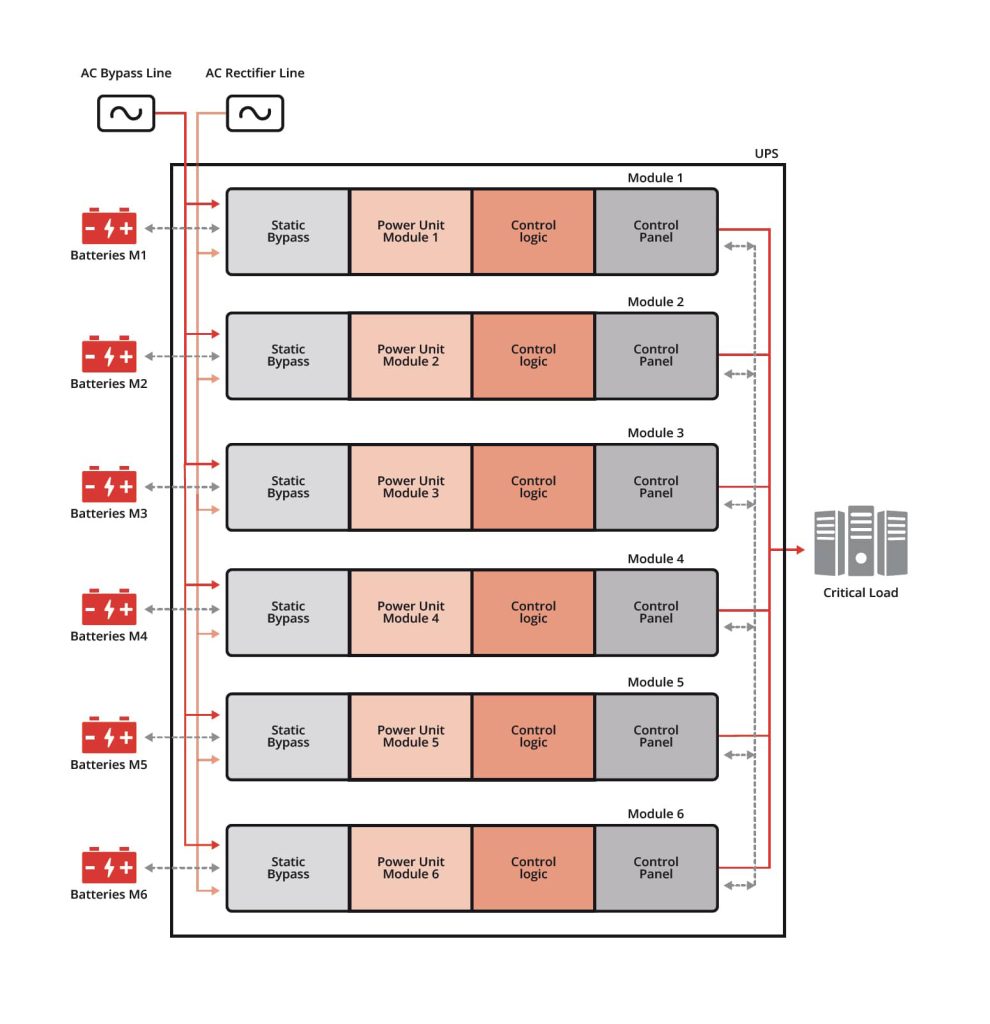
Emerging guidance suggests that more distributed UPS topologies and modular designs can help align capacity with AI demand growth and improve partial-load efficiency[8]. Distributed Active Redundancy Architecture (DARA) offers a promising approach by reducing stranded capacity and improving efficiency at realistic loading levels.
Constraint Stacking
By adopting modular, scalable architectures, operators can better manage load dynamics and reduce the risk of overloading individual UPS units, thus maintaining system resilience and efficiency.
Having a UPS with decentralized bypass offers a trustable configuration for the power management in AI Data Centers. DARA brings this solution to modern DC contexts supporting scalability, true redundancy and 99.9999999% power availability.[I2].
FAQ
Q: Why do AI workloads cause more dynamic power behavior than traditional enterprise IT?
A: AI training and inference jobs often run at high utilization on many GPUs simultaneously, creating synchronized power draw and rapid changes in load that differ from the more diversified, steady behavior of mixed enterprise applications[1].
Q: What rack power densities should colocation operators expect for AI tenants?
A: Industry experience shows AI racks commonly exceeding 30 kW, with many designs planning for 30–60 kW per rack and some going higher, which requires rethinking power distribution, UPS capacity, and cooling strategies[2].
Q: How does partial load operation affect UPS efficiency in AI-oriented data centers?
A: Many UPS systems are most efficient near full load, so when AI halls operate at 20–60% loading due to redundancy and growth headroom, actual efficiency can be lower than nameplate values, increasing energy losses and operating cost[3].
As AI-driven demands continue to evolve, data centers must adapt their UPS strategies to ensure reliability and efficiency.
Learn about Distributed Active Redundancy Architecture by downloading the white paper here.
References
- The Growing Impact of AI Server Loads on Modern Data Centers — WB Engineering
- How AI Is Transforming Data Center Power and Creating a $4 Billion Opportunity — Avanza Energy
- Choosing the Right Data Center UPS: 5 Key Factors for Improving Uptime — Data Center Knowledge
- AI Data Center Power Infrastructure: Designing UPS, Battery, and Energy Storage Systems for High-Density AI Workloads
- Expert Q&A: Why Battery Energy Storage Is the Future of Data Center UPS Solutions — FlexGen
- IEC 62040-1: Uninterruptible power systems (UPS) – Part 1: General and safety requirements for UPS — International Electrotechnical Commission
- IEC 62040-3: Uninterruptible power systems (UPS) – Part 3: Method of specifying the performance and test requirements — International Electrotechnical Commission
- EN 50600-2 Series: Information technology – Data centre facilities and infrastructures – Power distribution and energy efficiency — CENELEC
- Brochure — StratusPower 208V UPS 2026 — page 8
- Brochure — StratusPower Modular UPS 2026 — page 3