UPS For Banking & Finance
SPOF, Designed Out

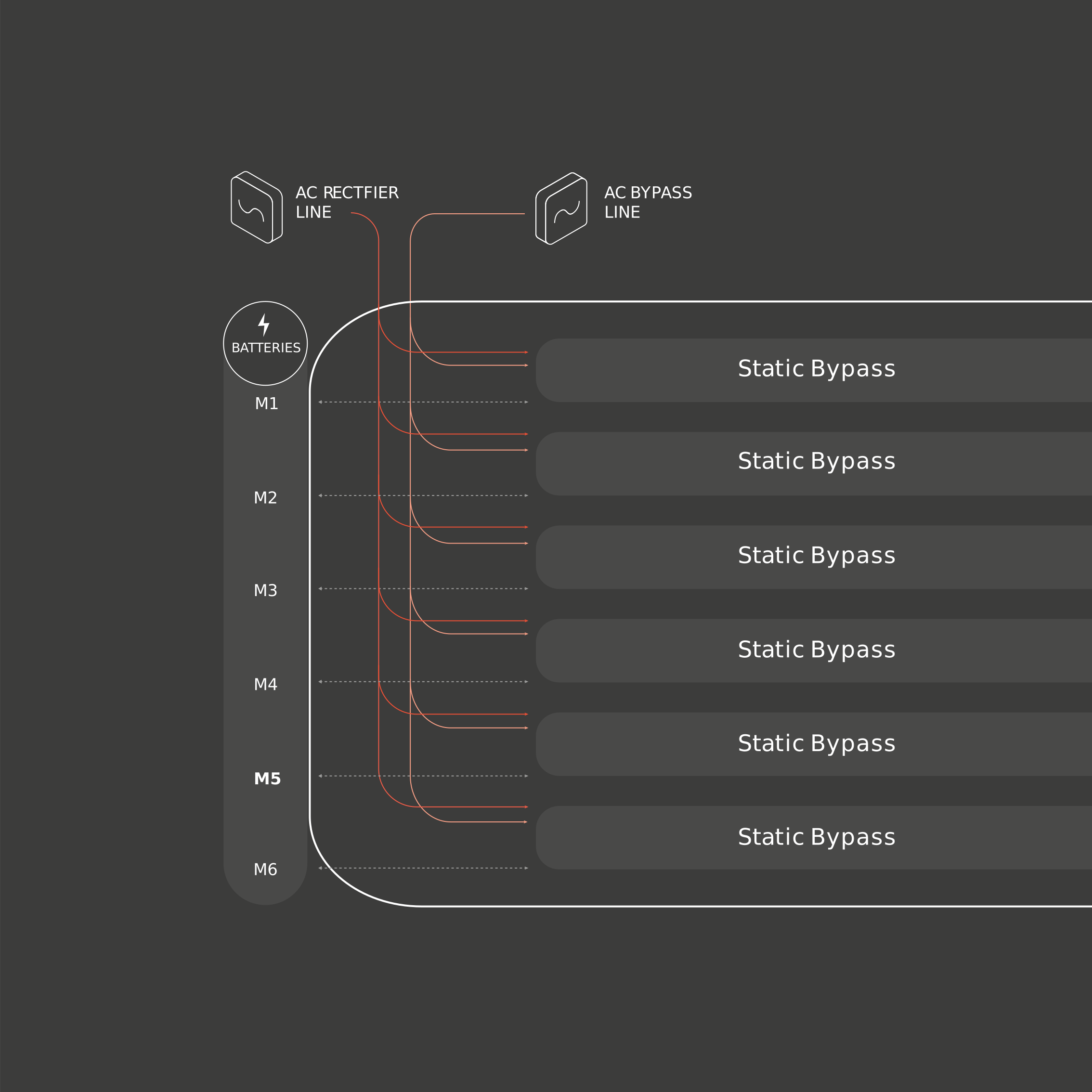
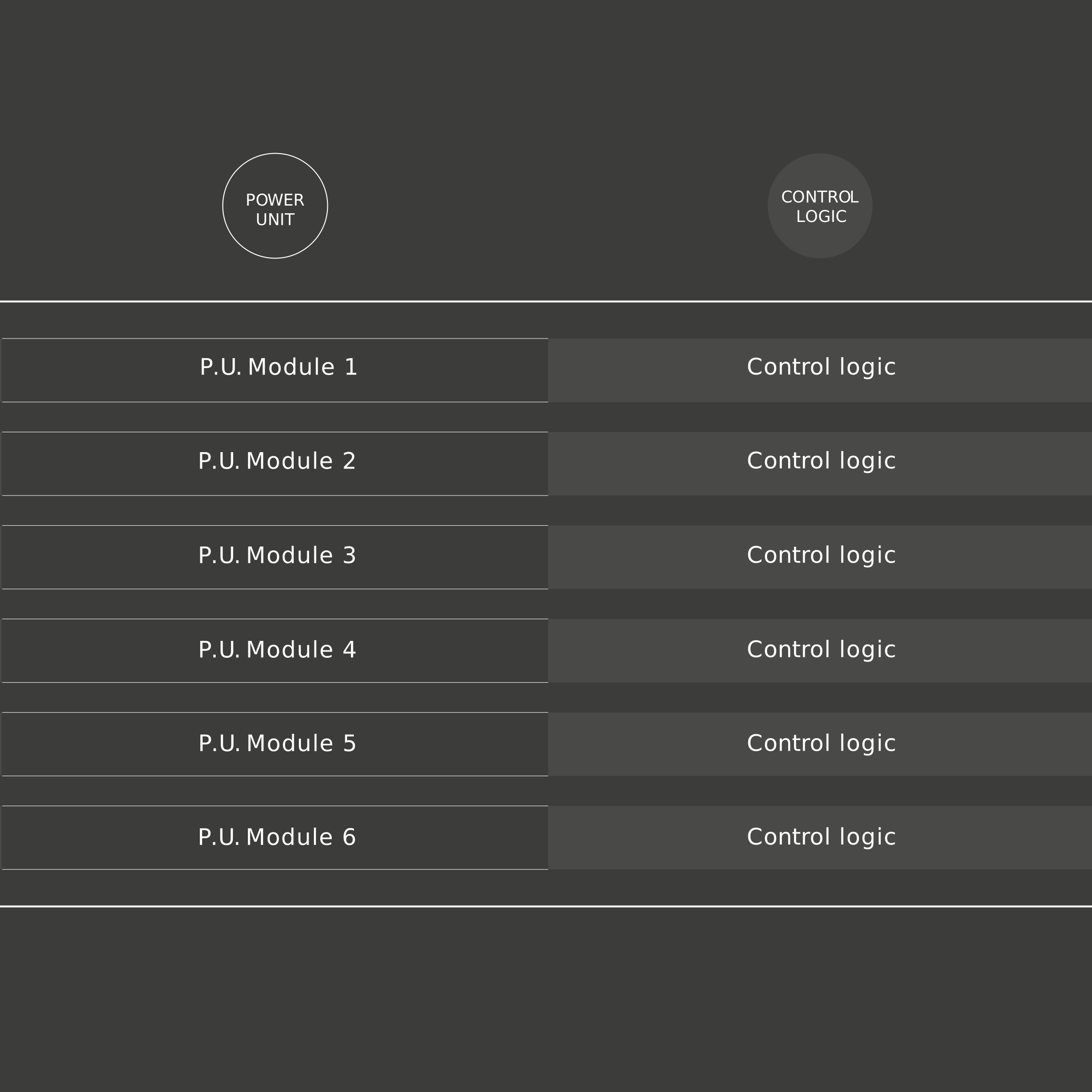
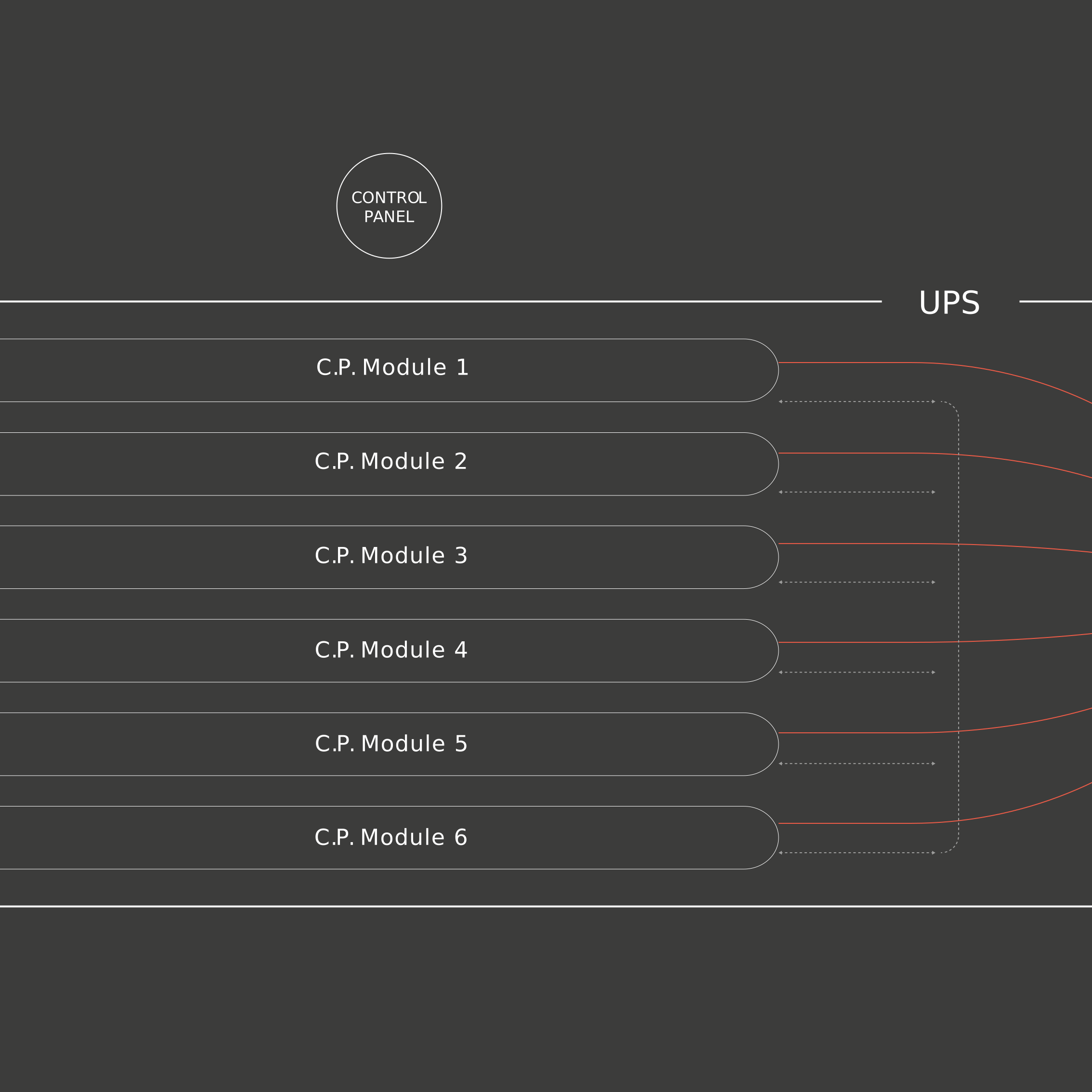
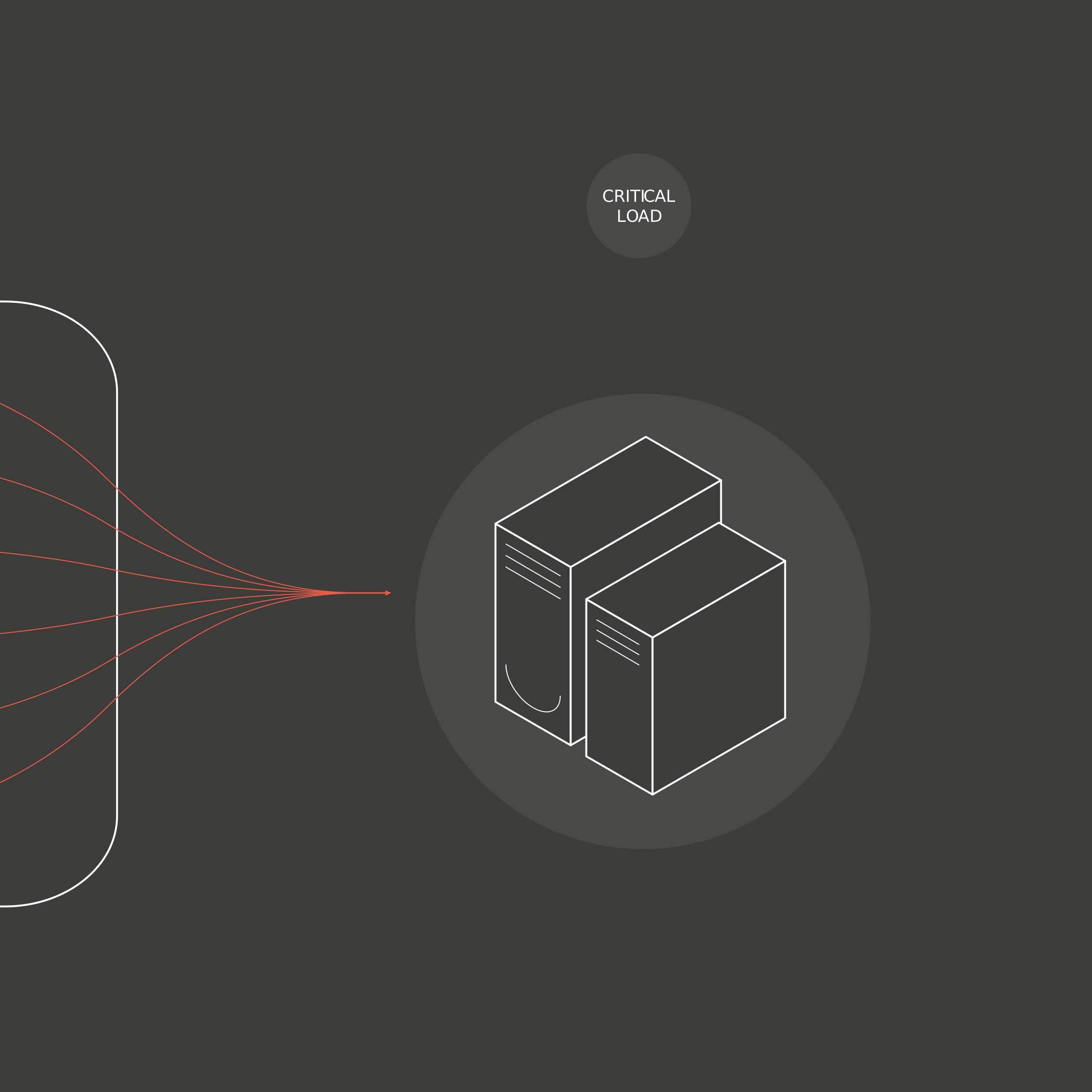
Every module,
its own bypass
and control.

Redundancy isn’t enough if modules share the same failure path. True resilience removes shared points of failure by giving each module its own bypass and control.

UPS For Banking & Finance
Reduce Human Error

The procedure was correct.
The architecture wasn't.

Transfer to bypass. Expose the load. Perform the work. Transfer back. Each step risks turning routine work into an incident. Distributed architecture removes the transfer.

Up to 9 nines

Availability design target, based on architectural modelling and configuration-specific assumptions.

No SPOF

within the UPS architecture by design. No shared static bypasses or control boards.

In Banks Today

Europe and Asia-Pacific. Client names withheld under confidentiality.

When power fails in banking,
it’s not just a facilities issue.

It can mean payment outages, trading disruption, regulatory scrutiny and lasting damage to customer trust.

Accountability ultimately falls on those who chose the architecture, redundancy and maintenance strategy. That’s the real specification behind every UPS decision: if it fails at 3am, is my judgment the one that ends up in the incident report?

Trusted Maintainability & Business Continuity

Battery resilience

Battery failure is one of the most common causes of UPS outages, but also one of the easiest to anticipate. Effective monitoring and testing help identify weak batteries before they become critical, while support for different battery technologies keeps the system flexible over its lifetime.

Open monitoring

A UPS should be part of the same monitoring ecosystem as the rest of the infrastructure. Through open protocols such as SNMPv3, Modbus/IP and API, its status and alerts can be integrated into ITSM, monitoring and incident-reporting platforms.

Efficiency at real load

UPS systems rarely operate at full load. MEM adapts the number of active modules to actual demand, maintaining redundancy while improving efficiency across the operating range that matters in real-world use.

Predictable delivery

Resilience should not be compromised by supply-chain delays. Predictable lead times help ensure that the architecture approved at design stage is the same one delivered and commissioned on site.

Evidence resilience to risk and regulators

You need the power layer to hold an impact tolerance and survive a scenario test, on paper and in the room. Start with what makes it explainable to second line.

Reduce downtime and recovery time

Every minute of MTTR is a minute closer to a reportable incident. Start with how recovery time becomes a design property instead of a hope.

Defend the lifecycle cost case

Finance wants the TCO story, risk wants the resilience story, and you walk into both rooms with one document. Start with efficiency at real load and a 30-year frame.

The architecture is the argument. The guide is where it’s laid out in full.

The No-SPOF Standard sets out how a banking power chain is assessed and where single points of failure actually sit: mapping, impact tolerances, scenario testing, concentration risk, applied to the UPS the way the rest of your estate is already assessed. Architecture, not marketing. Written to be read by an engineer and defended to a board.

Centiel builds modular and standalone UPS from core data centres to branch and ATM networks. The form factor follows the site; the engineering discipline doesn’t change.

Disclaimer

Performance figures are based on architectural modelling and configuration-specific assumptions.
Actual performance depends on system configuration, installation environment, maintenance practices, and operating conditions.

Module and component replacement times assume trained personnel, adherence to site procedures, and availability of spare modules.
Battery, efficiency and capacity-expansion claims are subject to system configuration and technical validation.

Tier certification is granted by independent third-party assessment bodies and depends on full compliance with facility design.
Typical factory lead time is four to six weeks from confirmed order and final technical release, subject to configuration, production capacity, and prevailing supply conditions.

Download: UPS Architecture for Banking & Finance: The No-SPOF Standard