In Colocation, a power failure isn’t just a technical incident… it’s a business event.
SLA penalties trigger before root cause is clear.
Customer churn accelerates. Reputation recovery takes months, not days, and accountability doesn’t diffuse.



Containerized UPS deployed in weeks, not months

SLA Commitment. Global deployment & service footprint

Typical order to delivery lead time
Datasheets list ratings. Colocation decisions turn on how the power chain behaves under load, during maintenance and when a component fails.

Architecture that eliminates single points of failure, not just adds backup capacity.

Schedules that protect your commissioning window, not hostage you to 18-month forecasts.

Measurable reliability: how fast you recover, how long between failures, how the system performs over its lifecycle.

TCO that survives finance scrutiny: efficiency, serviceability, and downtime risk over 15 years.

In Colocation, a power failure isn’t just a technical incident… it’s a business event.
SLA penalties trigger before root cause is clear.
Customer churn accelerates. Reputation recovery takes months, not days, and accountability doesn’t diffuse.

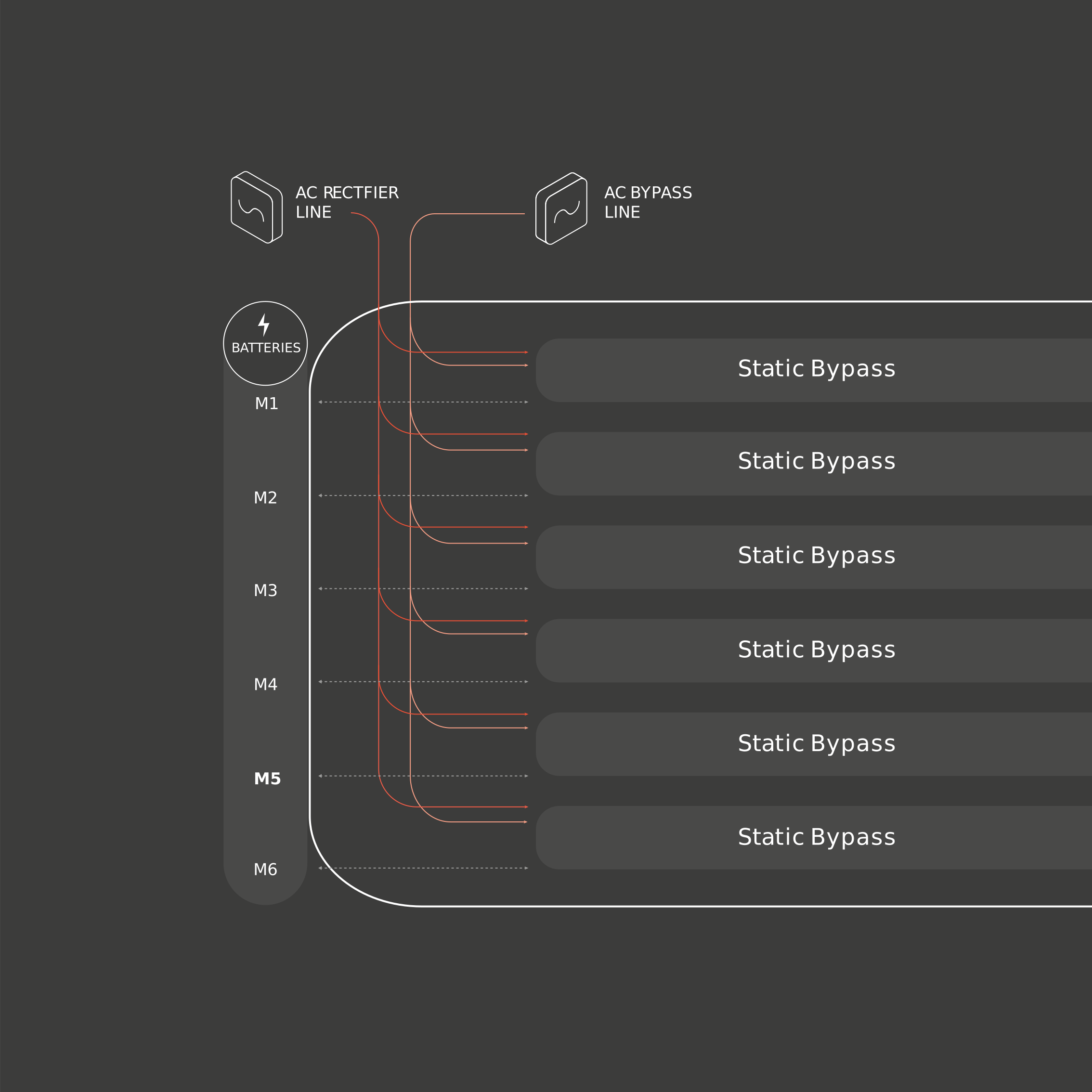
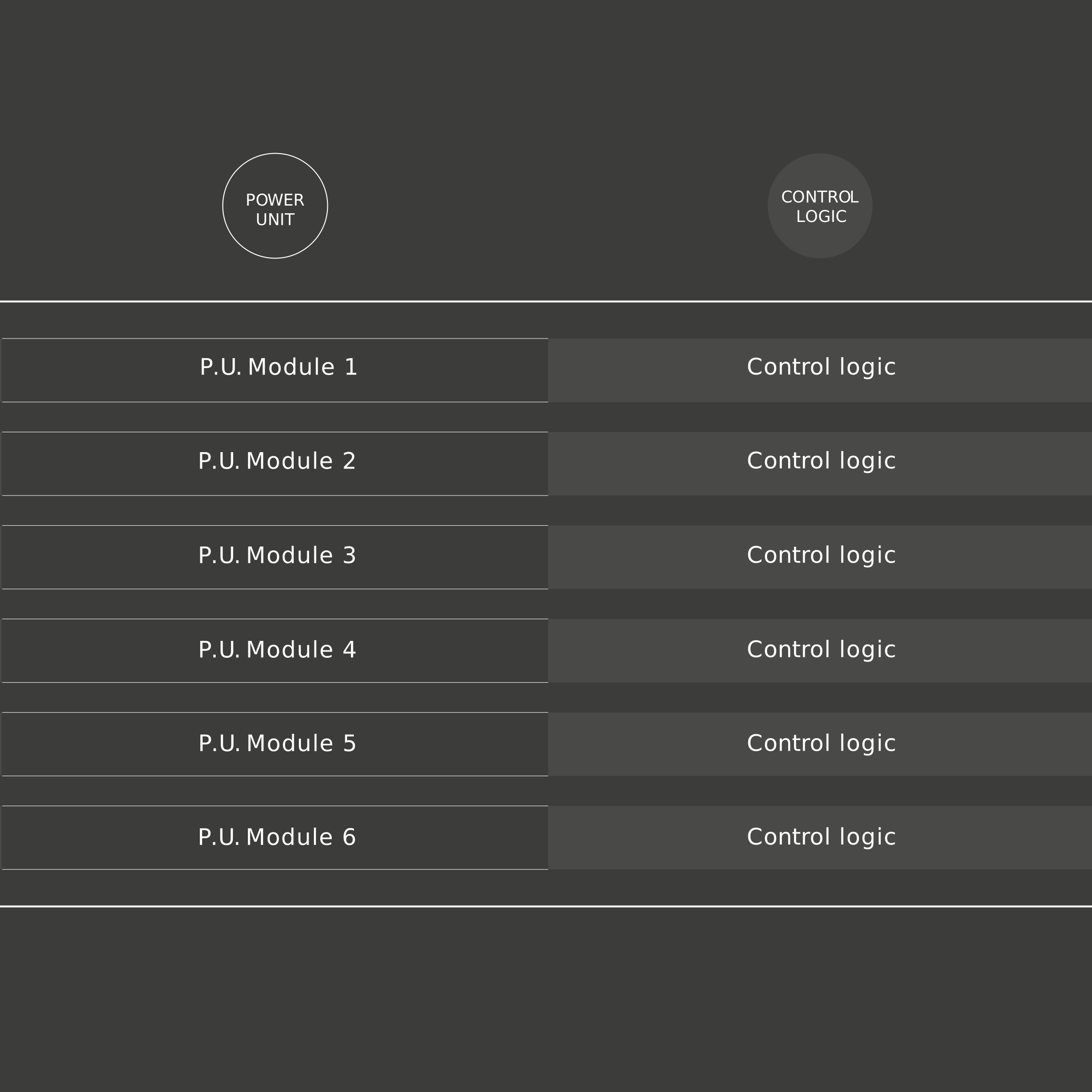
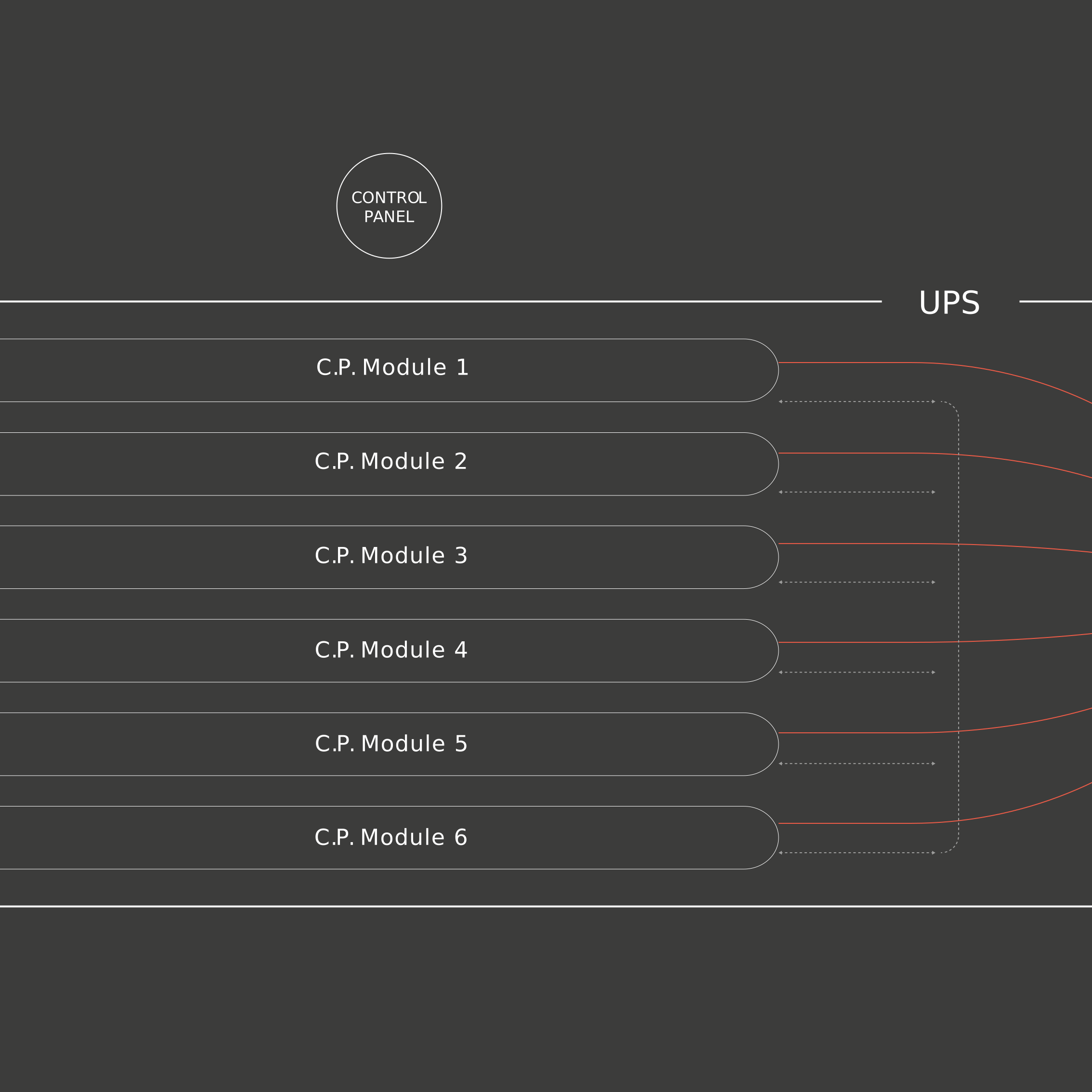
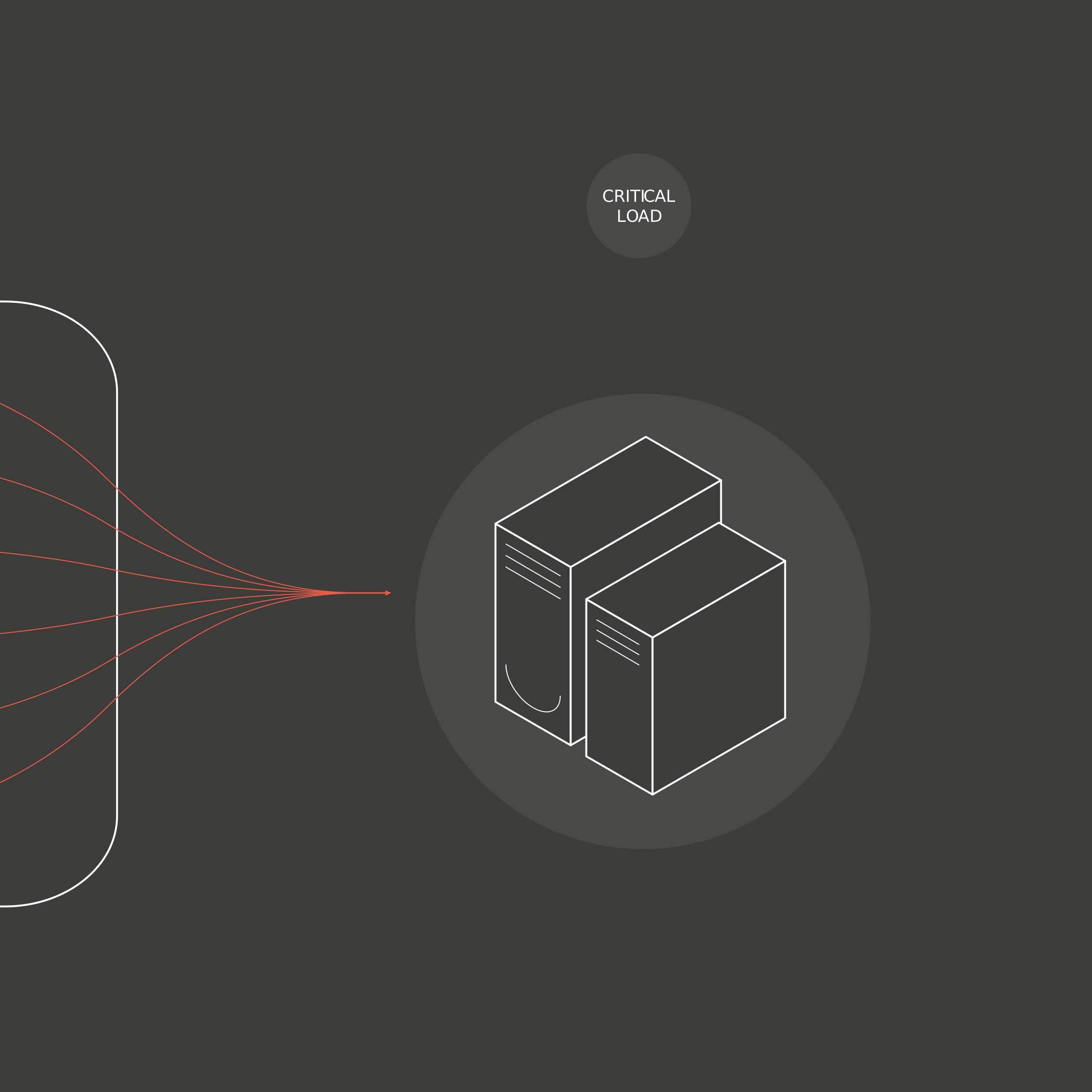
Centiel architecture eliminates single points of failure at the topology level, so when a component fails, the load stays online and the fault stays contained.

No shared failure paths. No central control logic. DDM technology means decisions are distributed across modules — the system responds to the sum of individual module decisions rather than a single point of control.

Hot-swap modules, isolated fault domains, and service access designed for 24/7 operation. Maintenance without exposure, without windows, without SLA risk.

Capacity grows in increments, not overhauls. Add power without redesign, without load interruption, without stranded investment.

Architecture designed to support Uptime Institute Tier III/IV requirements. Documentation that facilitates your certification pathway.

In colocation projects delivered through ePods, availability is decided early, in how the UPS occupies space and fits into the prefabricated design. Footprint is an architectural variable, not a packaging constraint. It sets cooling margins, service access and how reliably capacity can scale.

StratusPower™ reaches a power density of 1 MW/m². The floor space it saves goes back to cooling, and heat dissipation stays controlled. Density rises without squeezing the clearances that maintenance depends on.

A UPS frame is specified for well over a decade; its batteries are not. Chemistry gets chosen again at every replacement cycle, against fire codes, supply conditions and prices that will have moved since commissioning. StratusPower™ accepts lead-acid, VRLA, NiCd and lithium across a 240-600 VDC window without derating, so each cycle stays an open decision.

AC connections use configurable flanges, top or bottom entry, matched to the project’s bus-bar layout. That allows precise dimensioning without forcing a standard layout into a non-standard build. Footprint then stops being something to negotiate and becomes a predictable part of integration.
Architecture turns into operations. How redundancy topology, maintenance access and expansion path show up on a live colocation floor.

Hot-swap modules and isolated fault domains. No maintenance windows, no customer notifications, no SLA exposure during service.

Distributed redundancy with no shared failure paths. Uptime targets become defensible commitments, not hopeful claims.

Modular capacity increments. Expand when demand requires — no stranded capex, no architectural rework, no load interruption.

Architecture and documentation aligned with Uptime Institute Tier III/IV power-path expectations. Audit-ready evidence for the UPS side of certification.

Understand how failure paths are eliminated and what MTTR/MTBF evidence looks like in practice.

See how 4-6 week delivery* works. Process, capacity reservation, and what protects your commissioning window.

Architecture and documentation aligned with Uptime Institute Tier III/IV power-path expectations. What we contribute, scoped clearly.
Model 15-year lifecycle economics: acquisition, energy, maintenance, and downtime risk in a format finance accepts.
Architecture and operation. Both documented.
Architecture, standards, and topology: the engineering foundation that eliminates failure paths before operation begins.
Four architectural facts, before a single reference is discussed

Designed for up to 99.9999999% availability. Redundancy at the topology level. No shared failure paths, no single points of failure in the power chain.

IEC 62040 compliance. Architecture aligned with IEEE, NFPA, and Uptime Institute Tier III/IV power-path expectations.

Hot-swap capability and isolated fault domains. Designed for service access without load interruption.

Capacity expansion in increments. Architecture supports growth without redesign or stranded investment.

Centiel was created to solve a structural problem in mission-critical power: systems that only reveal their weaknesses once they are live. This is the engineering intent behind every architecture decision that follows.

Field performance, deployment record, and third-party recognition.
Not marketing. Measurable outcomes.

Live legacy UPS replacement with zero downtime. Efficiency from below 90% to above 97%. Scalable architecture ready for AI workloads.

Government procurement selection. Tight schedule delivered. Modular architecture supporting national AI and cloud infrastructure.

Not a startup, not a rebrand. Four decades of UPS architecture development and the engineering continuity that comes with it.

Financial transparency and institutional accountability. The governance structure of a company built for 30-year infrastructure partnerships.


A colocation operator’s guide to how availability is calculated, where shared components expose every tenant at once, and how to evaluate redundancy before you specify. Includes the Redcentric Heathrow deployment.
How MTBF and MTTR set availability, and why the gap between nines matters when every tenant shares the feed.
Central static bypass, central control board, single parallel bus: three shared components that can put every tenant on a feed out at the same time.
What concurrent maintainability depends on, and why a replacement module should be tested inside the running frame before it takes load.
Ready for an RFP or design review, whichever vendor you evaluate.
Performance figures are based on architectural modelling and configuration-specific assumptions.
Actual performance depends on system configuration, installation environment, maintenance practices, and operating conditions.
Module and component replacement times assume trained personnel, adherence to site procedures, and availability of spare modules.
Battery, efficiency and capacity-expansion claims are subject to system configuration and technical validation.
Tier certification is granted by independent third-party assessment bodies and depends on full compliance with facility design.
Typical factory lead time is four to six weeks from confirmed order and final technical release, subject to configuration, production capacity, and prevailing supply conditions.