UPS for Telecom Networks
Live-Site Modernisation

Nobody takes the central office down. The architecture assumes it.

The −48 V plant stays where it is. A modular AC uninterruptible power supply installs beside it, and modules are replaced under load with no transfer to bypass.

UPS for Telecom Networks
Distributed Control

N+1 holds until something is shared. Then it does not.

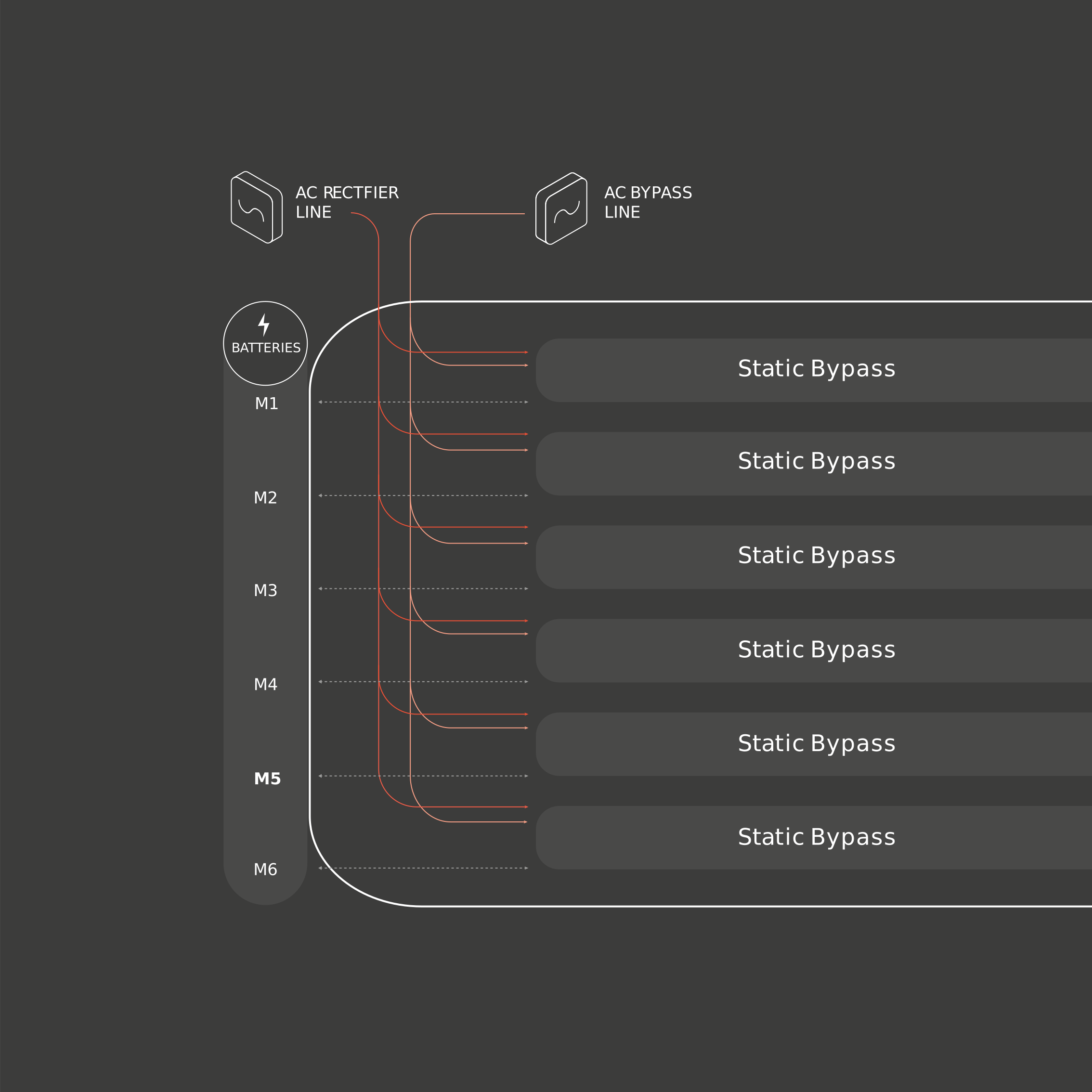
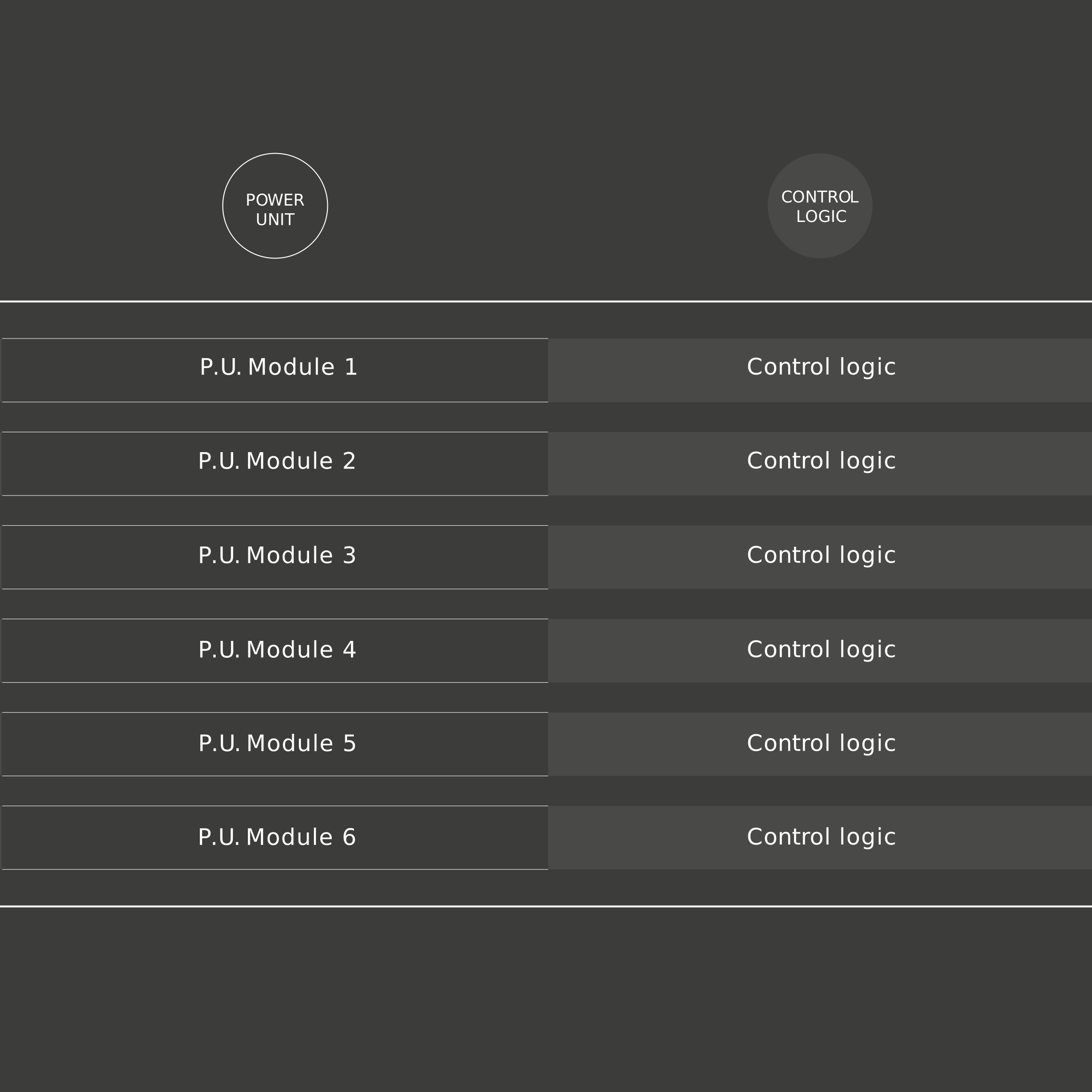
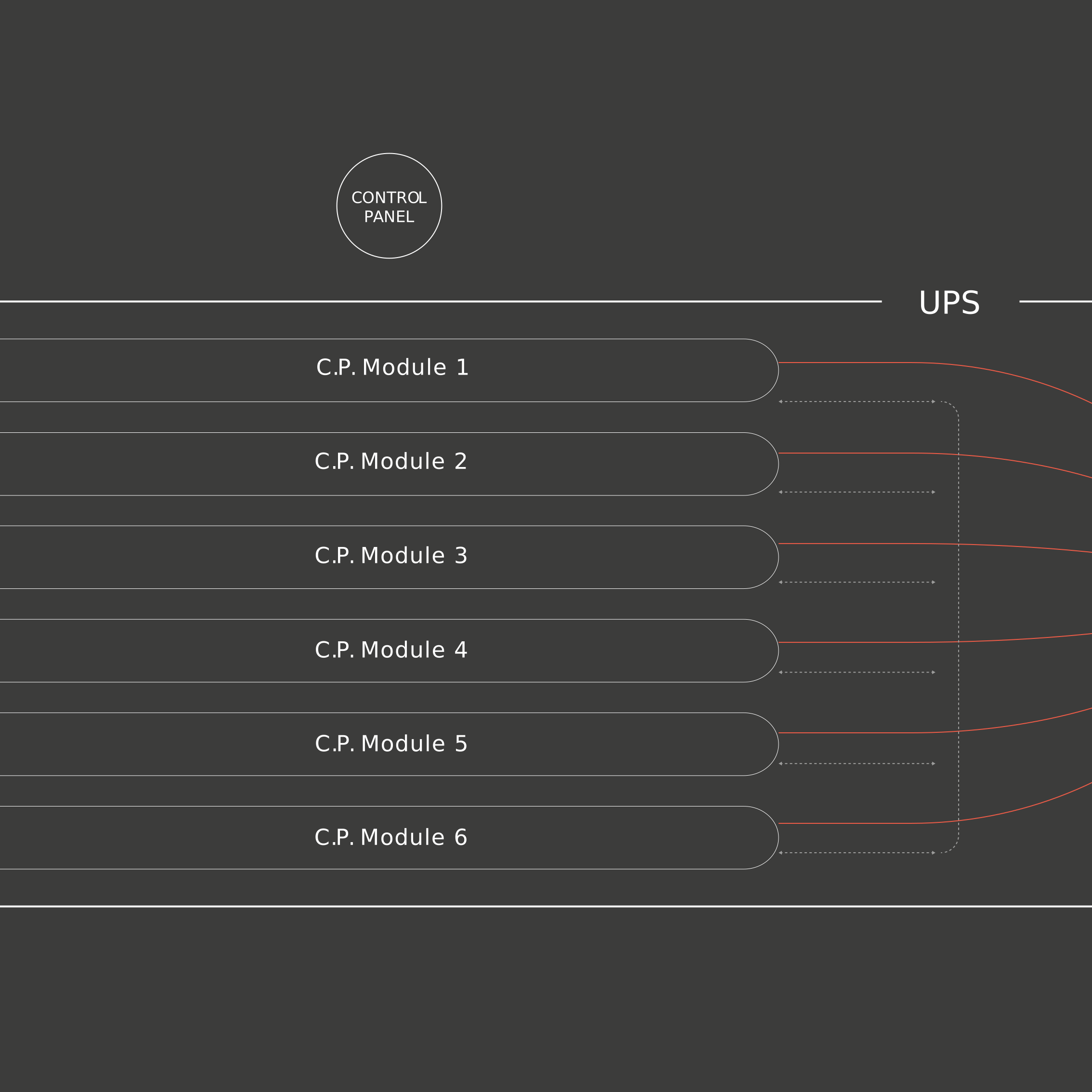
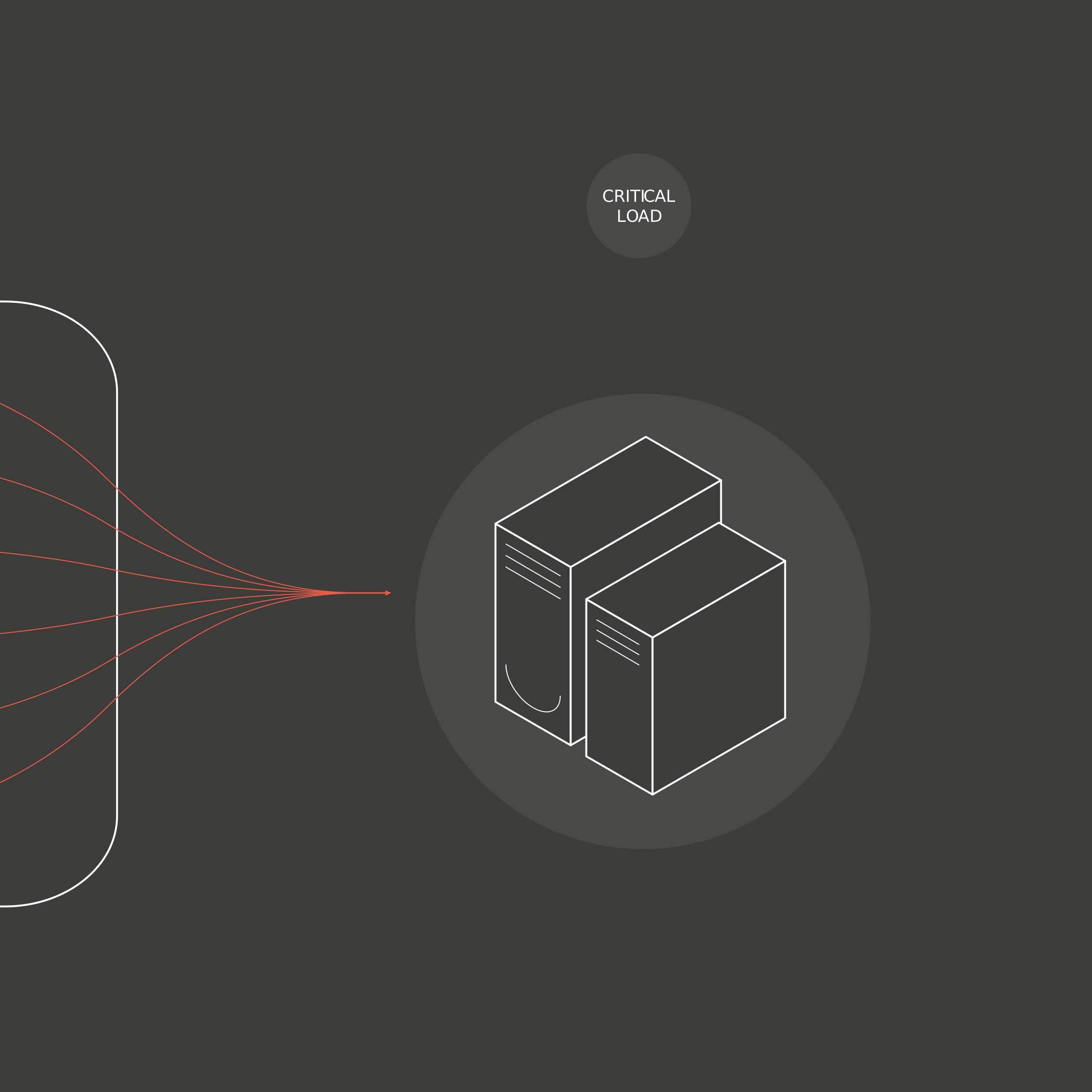
Each module is a complete uninterruptible power supply, with its own rectifier, inverter, static bypass and control. No single control board, static bypass or parallel bus sits beneath them.

Up to 9 nines

Designed UPS availability*

<3 min

Demonstrated module swap*

97.6%

True online VFI efficiency*

Power causes few outages, and more lost hours than any other cause.

Power is behind about one network incident in seven, and more than half of all lost service hours.*

It rarely has its own line on the risk register. DC and AC plant keep separate records.

Both can change. So can the shared part that takes redundancy down with it.

The Smallest Room and The Real Load Set the Site Design.

WHAT HAPPENS WHEN THE MAINS COMES BACK

The dip is the easy part. The recovery is where sites trip.

Double conversion handles the sag, and the load never sees it. The harder moment is restoration, when a site’s rectifiers, chargers and cooling all reach for current at once.

CHEMISTRY, CYCLES AND THE REPLACEMENT THAT FOLLOWS

The battery decides the site's lifecycle cost, not the UPS.

Across a distributed estate the battery is what gets replaced, and the replacement is a site visit before it is a purchase. Cycle life, footprint and how often a technician has to attend are the numbers that compound.

ACROSS THE RANGES A TELECOM ESTATE USES

One architecture, from a rack slot to the core site.

StratusPower™ and CumulusPower™ cover three-phase from 10 kW to 3.75 MW, with DARA™ throughout. StratusPower™ is also available as a Universal Rack UPS in 10 to 30 kW modules, fitting any 19-inch rack up to 120 kW.

WHEN THE ROOM CANNOT TAKE ANOTHER CABINET

Density decides whether the upgrade happens at all.

Up to 1 MW/m² in a transformerless frame, with modules light enough for two people to handle. Where there is no room for another cabinet and the floor will not take more weight, density is what makes the project possible.*

Writing the specification

Interface behaviour, figures at defined load points, and an architecture a specification can carry. If it is not specified, it is not evaluated.

Making the capital case

What it does to the energy line, to maintenance, and to the sites you would otherwise have to re-engineer. Arguments that hold in a capital review.

Modernising a live estate

Modernising power under a network that does not stop. Staged capacity, module-level work, and no service window to negotiate with operations.

Why Centiel Exists

Centiel was created to solve a structural problem in mission-critical power: systems that only reveal their weaknesses once they are live. This is the engineering intent behind every architecture decision that follows.

Disclaimer

Performance figures are based on architectural modelling and configuration-specific assumptions. Actual performance depends on system configuration, installation environment, maintenance practices, and operating conditions.
Module replacement. Demonstrated live module replacement in under 3 minutes, with the system under load, no transfer to static bypass, and the module isolated and tested within the running frame before accepting load. A standard maintenance procedure, subject to trained personnel, site procedures and spare-module availability.
Efficiency. Up to 97.6%, depending on configuration and operating conditions.
Availability. Availability design target of up to 99.9999999%, based on architectural modelling and configuration-specific assumptions.

Service response. Response time available under applicable service agreements and defined regional coverage.
Lead time. Typical factory lead time is four to six weeks from confirmed order and final technical release, subject to configuration, production capacity and prevailing supply conditions.
Telecom deployments. Centiel modular UPS systems are in production at multi-megawatt scale with telecom operators across Europe, the Middle East and Asia. Operator names are held in confidence. Deployment detail is shared on request.
Incident proportions. Figures describe reported telecommunications incidents in European regulatory reporting and are not a statement about any individual operator or market.
Scope. Capacity, power density, efficiency and availability figures apply to Centiel’s modular UPS ranges.

Download: Telecom Power Specification Guide